The biggest fear of tourists when they first come to Japan on their own is often the extremely intricate train system. Hundreds of train lines of many different companies interwoven underground and above can overwhelm anyone. However, as long as you master a few principles of reading signs, have your payment card ready and have an internet connection to look up, traveling by train in Japan will become very simple.
1. Understand the structure of the train system in Japan
The railway system in Japan is not operated by a single unit but is divided among large corporations. Most notably, JR (Japan Railways) group owns surface train lines and Shinkansen high-speed trains. Besides, there is the Subway subway system of each city and many other private train companies such as Keio, Odakyu, Tobu or Hankyu.
The important point to note is that each cruise line usually has separate entrances and ticket gates. Even though they have the same station name, the JR line and Subway line entrances may be on two different floors or a few minutes' walk apart. Identifying the correct cruise line name before entering the ticket gate will help you avoid wasting time going the wrong way.
In addition, on the same track there can be many types of trains running at different speeds. Local trains will stop at all stations, while Rapid, Express or Limited Express trains will skip small stations to reach larger stations faster. If your destination is a small station, boarding the wrong Express train could cause you to miss your destination.
2. Suica and Pasmo IC cards: Indispensable companions
IC cards like Suica or Pasmo are prepaid smart payment cards that help you move through ticket gates without having to buy paper tickets for each leg. You just need to lightly touch the card to the sensor area at the ticket gate when entering and leaving the station, the system will automatically deduct the correct amount corresponding to the distance traveled.
You can buy physical IC cards at ticket vending machines at major train stations or integrate Suica and Pasmo cards directly into the wallet application on your smartphone. Using a card on your phone brings great convenience because you can top up money directly via your bank card without having to line up to find a cash deposit machine.
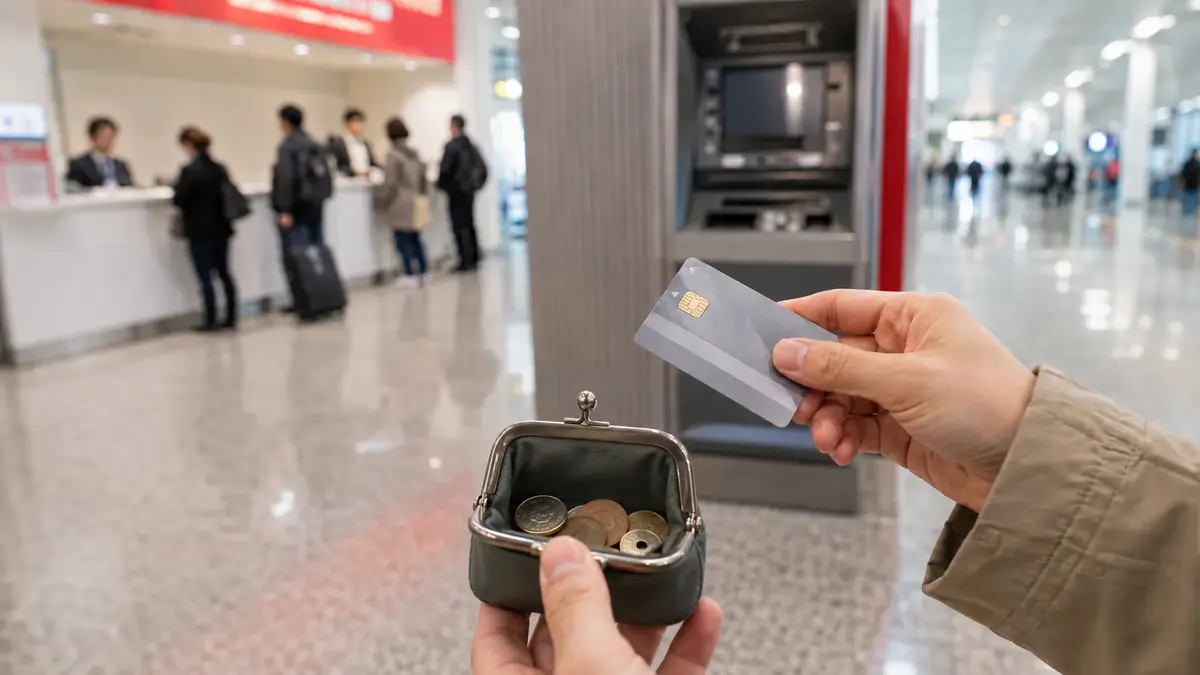
Note that if using a physical IC card, top-up machines at stations in Japan almost only accept cash in Yen denominations. Therefore, always keeping a little cash in your wallet to top up your card is a necessary habit. IC cards are not only used for trains but can also be used to pay on buses, vending machines and convenience stores.
3. How to read signs and station names on the platform
Each train line in Japan is coded with a representative color and a unique alphabetic character. For example, the Yamanote line in Tokyo is green with the symbol JY, the Ginza line is orange with the symbol G. Each station on the line will be accompanied by a number, making it easy for foreign visitors to identify even if they do not know Japanese.
When standing at the station platform, the electronic board hanging above will display information in both Japanese and English. This table provides important information: train type (Local or Express), train arrival time, train end point (Bound for...) and car number. Carefully check the directional sign to make sure you don't board a train going in the opposite direction.
At signs placed along the tracks, the current station name will be in the center with the largest size. The name of the next station that the train will run to is placed next to it with a direction arrow. If the name of the station you want to go to is not in the direction the arrow is pointing, it means you are standing on the wrong side of the platform.
4. Smooth transfer process
Changing routes is an important skill that helps you move between different areas of the city. When you get off the train, look up at the signs hanging overhead and look for the words Transfer and the color or symbol of the next train line. Signs at Japanese stations are very detailed, giving step-by-step instructions through the corridors.
If you change to a train line belonging to the same company, you usually just need to follow the signs to the correct new platform number without going through the ticket gate. However, if you change from a JR train line to a Subway train line, you must swipe your IC card to exit the old company's ticket gate, then move to the new company's area and swipe your card to enter again.
At large stations like Shinjuku or Tokyo, the distance between train lines can take from 5 to 10 minutes on foot. Staying calm, following the flow of people and paying attention to the instructions on the ceiling will help you not get lost in large underground areas.
5. Use the correct train lookup application
Mapping apps like Google Maps work extremely well in Japan. The application not only clearly indicates which train line you need to take, but also provides the exact platform number, train departure time, the number of train cars you should board to facilitate changing routes, and the estimated cost for the whole trip.
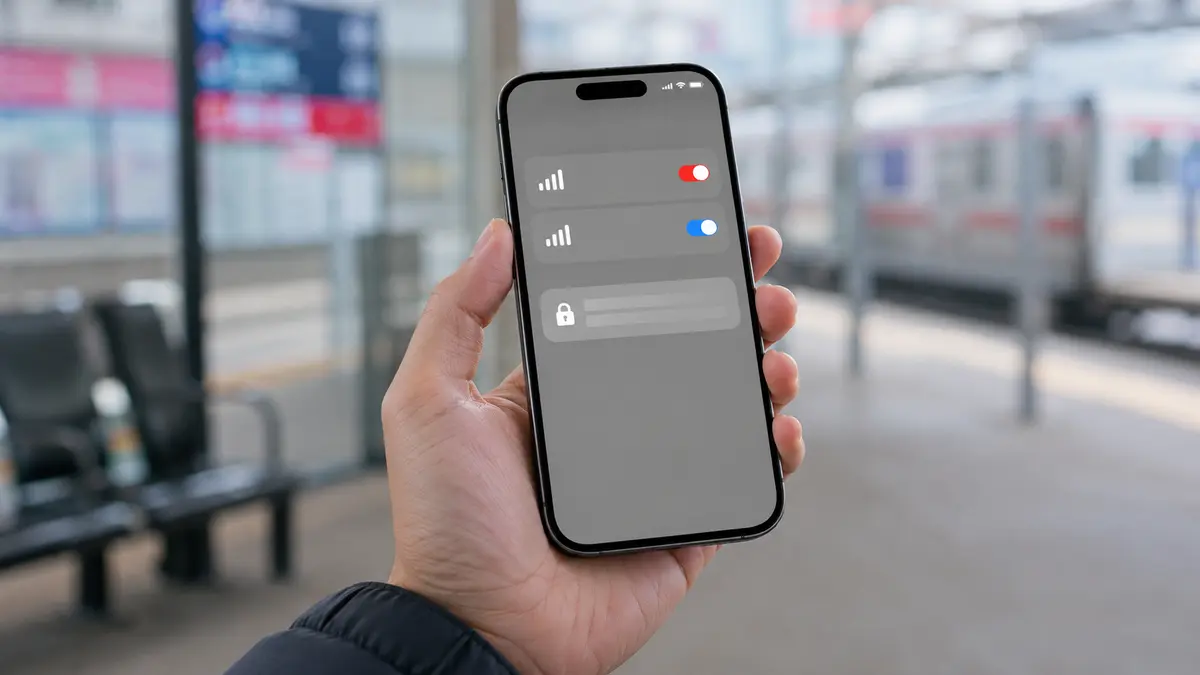
To use these lookup applications smoothly at the subway station, having a constant and stable internet connection is a must. The data capacity of about 1GB per day is an appropriate estimate for the needs of looking up train route diagrams, viewing route maps and searching for daily travel information.
Proactively preparing network solutions before your trip will help you avoid struggling to find public wifi at the station. Travelers can see Japanese eSIM package of shibaSIM, which is pre-installed on the device, helping to quickly look up train times and exits at the station as soon as they arrive in Japan.
6. Culture and rules of conduct on Japanese trains
On the station platform there are always painted lines marking the location where the train will stop. Passengers are required to line up neatly behind this painted line. When the train stops and the doors open, stand to the sides to give way to passengers on the train to completely get off before you get on.
Once inside the train carriage, remaining silent is an important code of conduct. You should switch your phone to silent mode, not receive calls, and talk to your companions at a very low volume. If you bring a large backpack or luggage, wear it across your chest or put it on the shelf above the seat to avoid disturbing people around you.
The rows of seats at both ends of the train are usually priority seats for the elderly, pregnant women, disabled or injured people. You can sit in these seats if the train is empty, but always proactively stand up and give up your seat when a priority person gets on the train.
Tip: Take a screenshot of the train route on the map application, including platform numbers and station codes of transit stations. This makes it easy to compare with actual signs at the station even when the network signal is unstable in some deep tunnel sections.
Frequently asked questions
How do I know if I should take the Local or Express train?
You need to check the list of stops for that train on the map application or electronic board at the station. If your destination is a major station, taking the Express or Rapid train will help save travel time. On the contrary, if the destination is a small station, you must take the Local train because fast trains will not stop there.
What should I do if I swipe my IC card and don't have enough money at the garage?
You don't need to worry too much when the ticket gate shows an error due to insufficient funds in your account. Right in front of the exit gate of each station there are automatic fare adjustment machines called Fare Adjustment. You just need to put the IC card into the machine, the screen will display the missing amount and you put the exact amount of cash in for the machine to top up, then take the card out and swipe normally.
Can I use Suica card on Android phones purchased in Vietnam?
The feature of adding Suica cards to e-wallets directly on Android usually only supports devices purchased in the Japanese market with integrated Felica chips. If you use an Android phone purchased in Vietnam, the optimal solution is to buy a physical IC card at the station or use an international bank card to buy tickets at the machine. For iPhone users from iPhone 8 and above, adding Suica to Apple Wallet is supported completely normally.
What should you do if you take the wrong train or get off at the wrong station?
If you discover you are on the wrong train, get off at the next station where the train stops. Then, move to the opposite station to catch a train running in the opposite direction to the old station or look for a sign to change to the correct line. In case you have trouble at the ticket gate, you just need to go to the customer service area (Station Booth) right next to the gate to ask support staff to reprocess the information on the card.
Closing
Traveling by train in Japan will no longer be a stressful experience if you understand how the routes operate and have your connecting device ready. Proactively looking up the route and station number right on your phone helps you always be in control of the trip.
To ensure seamless connection throughout the journey, you can refer to shibaSIM's service. With Japanese eSIM products, you will receive an activation QR code immediately after completing payment by VietQR transfer with a clearly listed price in VND. The service allows you to keep your Vietnamese SIM intact to receive bank OTP messages, and also has a refund policy if it cannot be activated due to package errors, bringing peace of mind to your travel.