To be honest, 2 days in Kyoto is quite a short period of time and somewhat rushed. You can hardly go through thousands of large and small temples or fully experience the slow pace of life of Japan's ancient capital. However, if you know how to prioritize key points, skip some overcrowded places and arrange your time scientifically, you will still have a memorable trip without falling into a state of exhaustion.
Day 1 am: Get up early to go to Kiyomizu-dera and take a turn to avoid the crowds in Ninenzaka
I arrived at Kiyomizu-dera temple (Thanh Thuy temple) at 6:45 am. At this time, it was just dawn, dew was still hanging on the ancient wooden roof and the road leading to the temple was almost deserted. This quiet scene is a complete contrast to the sea of people if you visit after 9am. The soaring wooden grandstand built entirely without nails is an architectural masterpiece, but the greatest value of going early is the true purity of a sacred place.
Leaving the temple around 8 am, I leisurely walked down the slopes Ninenzaka and Sannenzaka. At this time, traditional gift shops are just starting to open their canvas doors, and local people are cleaning up the wooden front porches of Machiya houses. I stopped to buy a Yatsuhashi cake filled with hot red beans from a long-standing bakery. The shop owner cheerfully reminded in Japanese with a few words of English that going this direction and turning to a small alley would be less steep and less crowded.
If you don't have very good physical strength, climbing over the stone steps continuously between two slopes can make your knees tired right from the morning. Practical advice is to wear comfortable sneakers and be prepared to walk a lot. Don't try to stop to take photos at every corner, choose a few open corners and save your energy for the long journey ahead.
Day 1, evening: Settle down on Gion street and Pontocho food alley
In the afternoon, move to Gion old town. Many people often tell each other about going on a Geisha or Maiko photo hunt on Hanamikoji Street, but in reality, the Kyoto government has now posted many signs prohibiting photography in private alleys to respect the privacy of residents. Instead of engrossed in hunting with my camera, I chose to walk slowly along the Shirakawa Canal, watching the paper lanterns cast a soft yellow light onto the water.
When it gets dark, Pontocho alley, located between Kawaramachi Street and Kamo River, becomes bustling. The alley is very narrow, just enough for two people to avoid each other. On both sides are hundreds of small, cozy-lit restaurants. If you want to try Yudofu (tofu stewed in Dashi broth), you should be mentally prepared that its taste is extremely light, sometimes a bit bland compared to the rich taste of Vietnamese people. This dish is more about enjoying the natural smoothness of Kyoto tofu rather than adding too much seasoning.
After dinner, resting on the banks of the Kamogawa River with a can of cold tea is a very pleasant way to end the first day. You will see groups of young Japanese people sitting and chatting along the riverbank. This moment helps you relax your mind after a day of continuously moving through many slopes.
Day 2 morning: Arashiyama Bamboo Forest and Tenryu-ji Temple: How to go without being overwhelmed?
Arashiyama is located in western Kyoto, about 30 to 45 minutes from the center. Sagano Bamboo Forest is very beautiful, but in fact the famous bamboo path only lasts a few hundred meters. If you arrive after 8:30 am, this small road will be filled with tourists and selfie sticks. That time, I took an early train at 7 a.m. from Kyoto station, so I could fully listen to the sound of bamboo stalks rustling in the wind.
Right next to the bamboo forest is Tenryu-ji temple with its famous Sogenchi garden, which has kept its design since the 14th century. Entrance fees to the garden and shrine are charged separately, but if time is limited, just buying a ticket to visit the garden is enough. Sitting on the wooden porch overlooking the lake reflecting the mountains in the distance brings a sense of peace, very suitable for regaining energy.
Leaving the temple, you can stroll across the Togetsukyo Bridge across the Hozugawa River. Although the area around the bridge has many famous modern coffee shops, the queues are often very long. If you don't want to spend 40 to 60 minutes just waiting to buy a cup of coffee, you should choose smaller traditional tea shops located in the back alleys.
Day 2 pm: Fushimi Inari Taisha Red Gate Shrine and practical choice
From Arashiyama, travel by JR train south to Fushimi Inari Taisha Shrine. This is a famous temple with thousands of orange-red Torii gates leading up to the top of Mount Inari. Unlike other temples that often close at 5 p.m., Fushimi Inari is open 24/7, so this is an ideal destination for late afternoon hours.
In fact, the journey to climb to the top of the mountain and back down takes about 2 to 3 hours of continuous walking with many steep slopes. With a packed 2-day schedule, trying to cover the entire mountain road is not really necessary and can easily cause exhaustion. Most visitors just need to go through the first Senbon Torii double gate, continue up to the Yotsutsuji stop to see the panorama of Kyoto from above and then turn back down.
If you are too tired after two days of walking, you can completely consider skipping the ascent and just visit the main shrine area below. This option makes the trip lighter, avoiding travel from becoming an unnecessary physical race.
Travel experience in Kyoto: Bus or train?
Many travel brochures often recommend taking the bus because the route system covers Kyoto extensively. However, practical experience shows that buses in Kyoto are prone to traffic jams during peak hours or tourist peak seasons. Inching along on a packed bus can ruin your entire day.
The optimal solution is to combine priority with electric trains. Urban subway lines and private train companies such as Keihan (to Gion, Fushimi Inari), Hankyu (to Arashiyama, Kawaramachi) or JR (to Arashiyama, Fushimi Inari) run very punctually and without worrying about traffic jams. You should pre-load money onto an IC card like ICOCA or Suica to quickly swipe at the ticket gate without having to line up to buy individual tickets for each leg.
During the travel process, it is extremely important to look up the map application on your phone. The map will clearly indicate which exit number you should exit from at the station, or which train you should catch at the pass yard. Losing network connection midway at complex stations like Kyoto Station will cause you to spend a lot of time struggling to find your way.
Prepare mobile Internet: eSIM or physical SIM for the trip?
To find directions, check train schedules and update information throughout your 2 days in Kyoto, you need a reliable network connection. In a city with many small alleys and a criss-cross traffic system like Kyoto, losing your phone network will cause a lot of trouble.
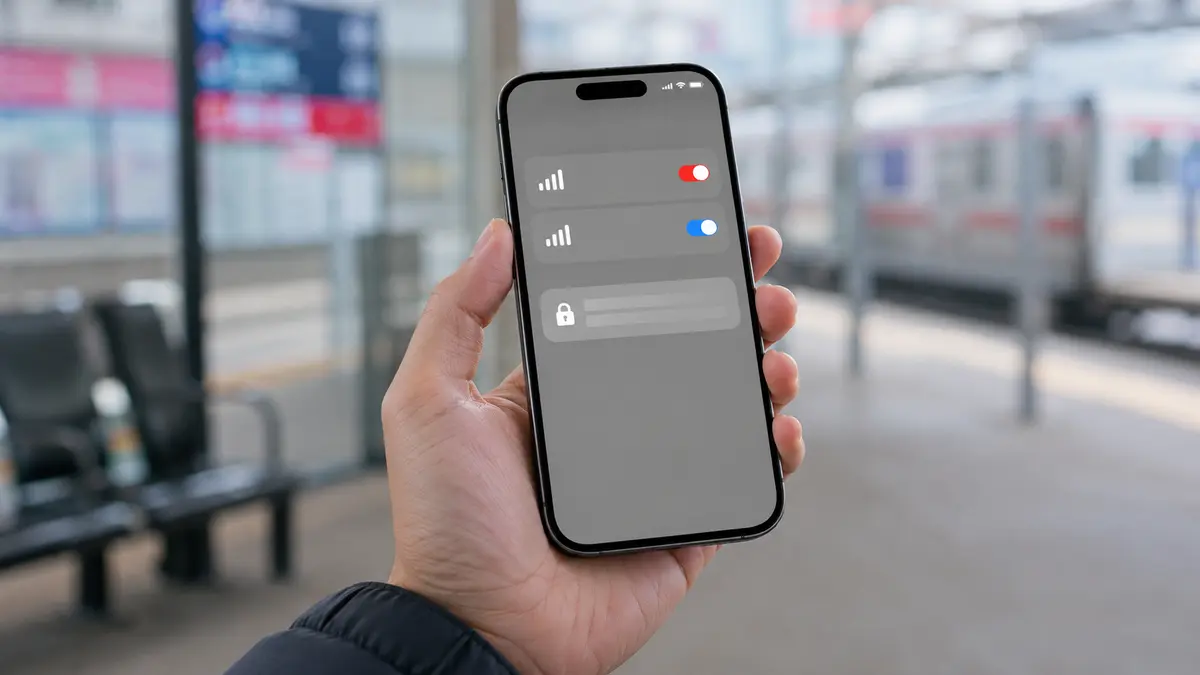
Currently, eSIM travel is the solution chosen by many people thanks to its convenience. After completing payment via VNPay or MoMo with the clearly listed price in VND, you will receive a QR code via email immediately. Installing an eSIM allows you to use the data network in Japan while still keeping the physical Vietnamese SIM on your device, without worrying about losing contacts or missing authenticated OTP messages from the bank.
Current models that support eSIM include iPhone XR, iPhone Based on practical experience, a capacity of about 1GB per day is enough for basic needs such as finding directions, texting and looking up information. If you often watch high-capacity videos or broadcast Wi-Fi to other devices, you should choose larger capacity packages. Service from shibaSIM also comes with a refund policy if it cannot be activated due to package error and a support team in Vietnamese.
Tip: Power sockets in Japan use standard Type A with two flat pins, voltage 100V. You should bring a suitable adapter and a backup battery with a capacity of about 10,000mAh to ensure your phone does not run out of battery in the middle of the day when using the map continuously.
Frequently asked questions
How to avoid the crowds from 10am to 2pm at major temples?
During this peak hour, you should change your direction to visit less congested areas such as the Tenryu-ji temple garden area, stroll along the banks of the Kamogawa River or spend time having lunch and resting at small tea shops. Avoid gathering in locations that are prone to traffic congestion such as the entrance to Kiyomizu-dera temple or the Sannenzaka ramp.
Should you skip Fushimi Inari if you only have less than 3 hours in Kyoto?
If your time is too limited, you can completely consider skipping Fushimi Inari to focus on central areas like Kiyomizu-dera and Gion. Moving to Fushimi Inari and walking around the temple grounds will take at least 2 to 3 hours, making you rush and not have time to enjoy the space.
What to do if iPhone eSIM cannot be activated upon arrival at the airport?
First, you need to check whether the device has enabled Data Roaming mode for the eSIM line. If you have turned it on but still have no network, connect to the free Wi-Fi at the airport to contact shibaSIM's Vietnamese support via messaging channels. In case the error due to the package cannot be fixed, the refund policy will ensure your rights.
Is 1GB per day enough for practical use?
The 1GB per day limit is an estimate based on the actual usage needs of most tourists, including searching Google Maps, finding trains, OTT messaging and basic web surfing. However, if you have a habit of continuously watching short videos, livestreaming or broadcasting Wi-Fi for others to share, this capacity will run out very quickly and you should buy a larger capacity package.
Closing
Although the 2-day itinerary in Kyoto is somewhat rushed, it will be memorable if you know how to balance sightseeing and personal energy. Don't try to cram in too many destinations, but take time to feel the unique ancient atmosphere of the Ancient Capital. To make your trip go smoothly and be proactive in all route finding situations, you can refer to Japanese eSIM packages from shibaSIM to maintain a stable Internet connection throughout the journey.