Going to Japan, the connection question often boils down to two options: rent a Pocket WiFi or use a eSIM for travel. There's no absolute "better" — just the one that fits your trip. This article compares the actual costs, batteries, procedures, and who should choose which.
Core difference
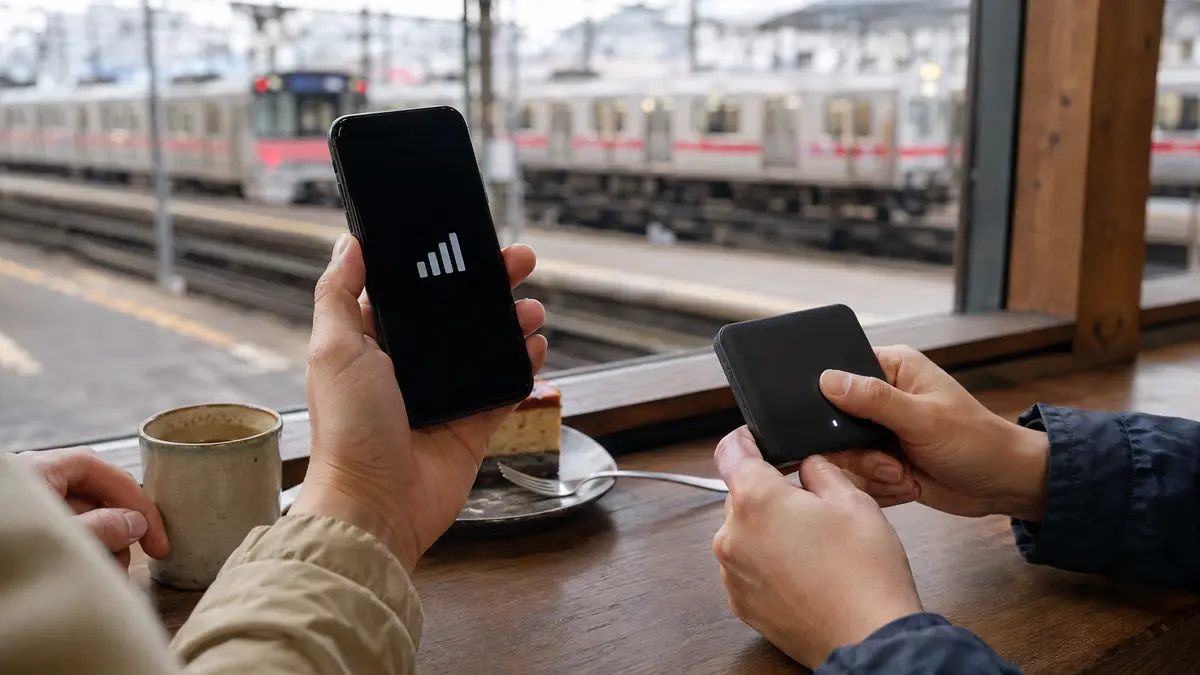
Pocket WiFi is a rented device: a pocket-sized transmitter that you pick up at the airport (or ship it home first), and return it after using it. It broadcasts WiFi to phones, laptops, and tablets at the same time.
eSIM is a digital data package installed directly into the phone via QR code, with no physical device to hold, charge or return.
From this difference come all the advantages and disadvantages below.
Real cost: don't just look at the daily rental price
Pocket WiFi rental prices are usually advertised per day (about ¥800–1,500/day depending on capacity and provider), but the total cost also includes:
- Deposit or insurance fee for equipment.
- Pick up/return fee at the airport counter, or shipping fee if sent home.
- Penalty for late payment, and compensation for loss or damage (usually ¥20,000 or more per piece).
eSIM paid once, no deposit, no return, no risk of returning the device.
Bottom line: Pocket WiFi only gets cheaper when you split it between multiple people. For example, if 4 people travel together for a 7-day trip, renting one card is ¥1,000/day = ¥7,000, dividing per person is ¥1,750 — cheaper than buying 4 eSIMs. But if you travel alone or with two people, the cost of a Pocket WiFi for one–two people is often more expensive than an equivalent eSIM.
Batteries and bulkiness
Pocket WiFi is the second battery you have to take care of: the actual usage time is usually only 3–5 hours, so when going all day you have to carry a backup charger for it. Forget to charge and the whole group will lose their lives.
The eSIM doesn't have its own battery, but if you use your phone to broadcast a hotspot for someone else, your phone's battery will drain quickly — essentially your phone is playing the role of Pocket WiFi.
One point that's often forgotten: with Pocket WiFi, the whole group only has internet when they're near the transmitter. Separating each other (one goes shopping, one goes back to the hotel) means one of them loses connection. With eSIM, each device is independent, everyone has their own network.
Procedures and risks
Pocket WiFi requires pick-up and return on schedule: line up at the airport counter upon arrival (usually the most tiring time), and remember to pay before flying back — forgetting to pay at the airport is a real hassle.
Install eSIM before flying using QR code, turn it on and go, no need to touch any counter, no need to remember to pay anything.
Can you still keep your Vietnamese number?
Both do not replace your Vietnamese SIM, but the way they work is different:
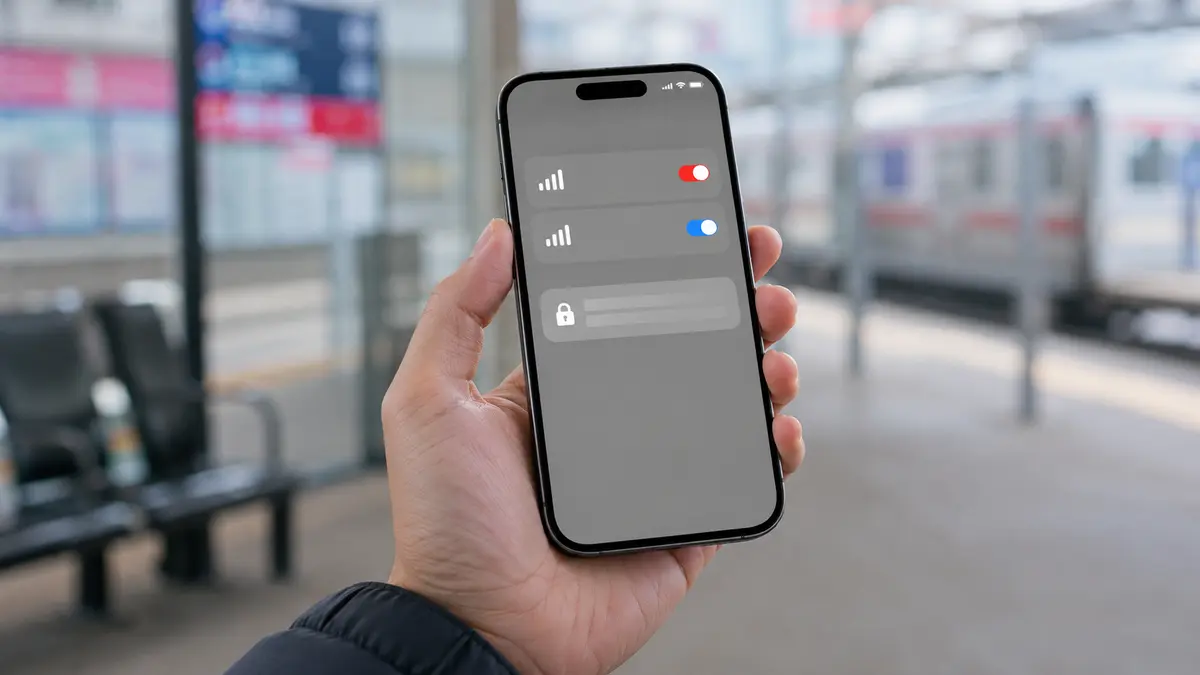
- eSIM runs in parallel right in the device, so you keep the Vietnam SIM turned on to receive OTP/calls, and the eSIM takes care of data. Details in the article keeping Vietnamese number when going to Japan.
- Pocket WiFi is just a WiFi source — it has nothing to do with the SIM. You still have to manually turn on your Vietnam SIM (and turn off its data roaming) if you want to receive SMS OTP.
Which one should I choose?
| Situation |
Should choose |
| Go alone, or as a couple |
eSIM — compact, cheaper when there are few people |
| In small groups or separately |
eSIM per person |
| Large groups always travel together |
Pocket WiFi divided per person |
| In the group there is an old device not supporting eSIM |
Pocket WiFi (or physical SIM for that device) |
| Need internet for laptop all day |
Pocket WiFi, or eSIM + accept battery drain |
Not sure if the device supports eSIM, see also eSIM or physical SIM and how to install Japanese eSIM in a few minutes.
Frequently asked questions
Traveling with two people, should we use eSIM or Pocket WiFi?
Usually eSIM for each person is more reasonable: two people still have an independent network when separated, and the cost of a Pocket WiFi for two people is usually not much cheaper. Pocket WiFi only wins clearly when the number of people using it is large.
Does Pocket WiFi waste your phone's battery?
No — it has its own battery, your phone only catches WiFi so it doesn't drain. In return, you have to charge the WiFi itself. On the contrary, using eSIM and then broadcasting hotspot to others will cause your phone's battery to drain quickly.
Can eSIM broadcast WiFi for others to share?
Yes, using the network sharing feature (hotspot). But your device will consume battery and data faster, and the other person will lose their life when away from you. If divided among multiple devices all day, a Pocket WiFi is more suitable.
What if my device does not support eSIM?
Select Pocket WiFi, or use a physical SIM for that device. How to check if the device has an eSIM is not included in shibaSIM's eSIM installation instructions.
What if I'm in Japan and need internet?
Pocket WiFi counters at the airport may be out of stock at that time or must be booked in advance; eSIM can be purchased and installed online even when in Japan, as long as there is a temporary WiFi source to download the QR code.
Closing
Traveling alone or in small groups or apart: eSIM is compact and often cheaper. Large groups always travel together or have devices that do not support eSIM: Pocket WiFi divided per person. If you choose eSIM, see shibaSIM's Japanese eSIM plans — receive a QR code immediately after paying in VND, keep the Vietnamese number intact, support Vietnamese when installing.