A very real worry when going to Japan is losing contact with a Vietnamese number, leading to not receiving the OTP code to log in to the bank or e-wallet. The good news is that you don't have to choose between the two: Japanese eSIM runs in parallel with Vietnamese SIM, so you can both have a network in Japan and keep a Vietnamese number to receive OTP and calls.
Why can eSIM keep Vietnamese numbers?
eSIM is a separate line installed on your device, running in parallel and not replacing your physical Vietnamese SIM. Thanks to that:
- Vietnam SIM is still in the device and still receives calls, messages, and OTP codes as normal.
- Japanese eSIM takes care of mobile data while you are in Japan.
- You don't need to take out your Vietnamese SIM card, so you don't have to worry about losing it or forgetting it at home.
Does your phone support eSIM
Before considering keeping your number, make sure your device receives the eSIM:
- iPhone: from iPhone XS, XR (2018) and above all have eSIM. Note that the physical dual SIM version sold in Hong Kong or mainland China does not have an eSIM.
- Android: Google Pixel (from Pixel 3), Samsung Galaxy S20/Note20 and above, and many high-end Oppo, Xiaomi, and Sony devices with eSIM. But quite a few Vietnamese or cheap phones have this feature cut off - so check first.
- Quick way to check: dial
*#06#, if the screen shows another row of EID (next to IMEI), the device has an eSIM. Or go to Settings and look for "eSIM" / "Add eSIM".
- Used phones bought in Japan: watch out for network lock (SIM lock). Locked devices from docomo, au or SoftBank will not accept eSIM from other brands - need to unlock (SIMロック解除) before using.
Most often forgotten step: turn on roaming for Vietnamese numbers before flying
This is the most common reason why "OTP does not return": Vietnamese numbers have not turned on international roaming (roaming) so they cannot receive waves in Japan. Many people arrive at the airport to discover that their Vietnamese SIM card is not working.
- Enable international roaming for your number on the network operator's side (Viettel, Vinaphone, MobiFone...) — usually just text or call the switchboard, most of them are free to activate. Did this while still in Vietnam.
- Pre-load some money and check if the number is still valid: If a prepaid SIM card is left without activity for a long time, the receiving direction may be locked, and the SMS will not come back.
- If your bank allows you to choose this form of authentication, please enable OTP via application (Smart OTP): it runs on the internet so it is more stable than SMS when abroad.
Correct settings to both have network and receive OTP
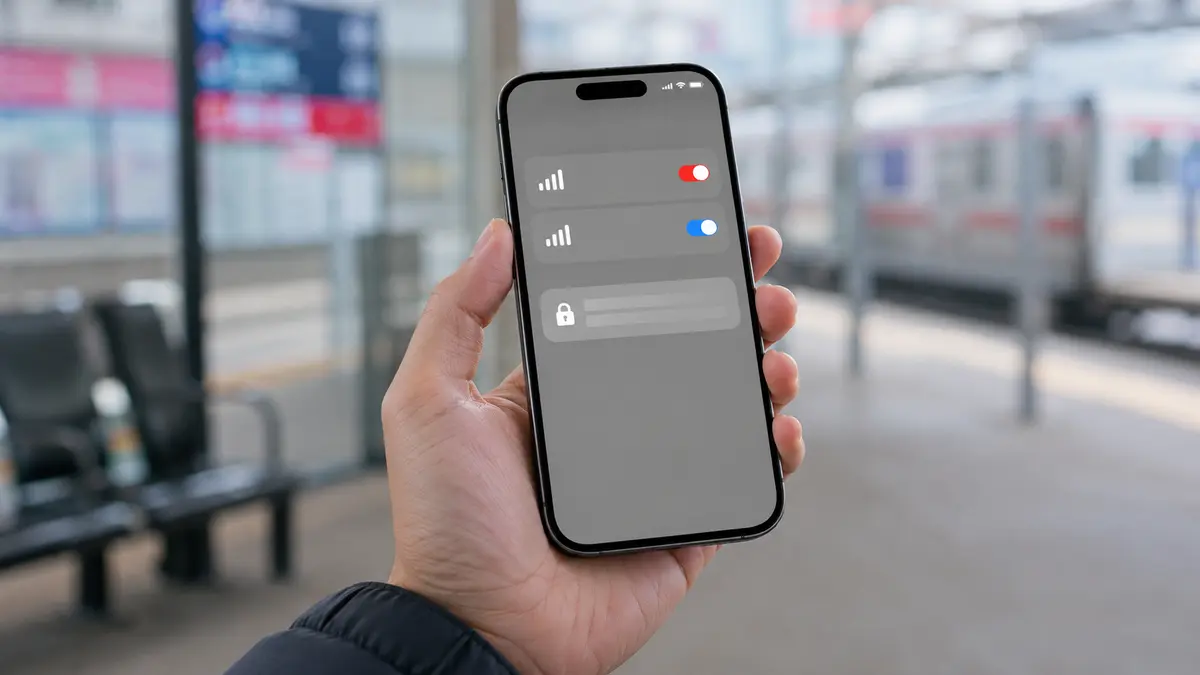
The key point is to separate roles: Vietnamese SIM takes care of communication, Japanese eSIM takes care of data. After installing eSIM and arriving in Japan:
- Keep your Vietnam SIM turned on to still receive calls and OTP messages.
- Set Japanese eSIM as the mobile data line.
- Turn off data roaming of Vietnamese SIM, so that Vietnamese numbers do not automatically join the network and incur expensive data charges.
- Enable data roaming for the Japanese eSIM line, because that is the line you use to go online.
It's unclear where these toggle steps are, see details in the article install Japanese eSIM on iPhone or on Android.
Why do I still receive OTP when I turn off data roaming?
Many people are afraid that turning off data roaming on Vietnam SIM will lose the OTP. That's not the case, because these two run on two different channels:
- Messages and calls go through voice waves. As long as the Vietnamese SIM is turned on and has roaming signal, it will come back, no data roaming button involved.
- Data roaming only controls whether the Vietnamese number uses 4G/5G when abroad or not — and this is what causes expensive charges. Turning it off will block data charges, and SMS OTP will still return to normal.
On the contrary note: don't turn on Airplane Mode just to be sure. Airplane mode turns off voice signals, so SMS OTP will not be returned. Just leave the Vietnam SIM turned on, just turning off data roaming is enough.
Note about OTP codes when in Japan
There are two types of OTPs, and the way they arrive at your device is slightly different:
- OTP via SMS: sent to your Vietnamese number. Just keep Vietnam SIM turned on to receive. Receiving incoming text messages when abroad is usually free, but it depends on the carrier and plan, so check first. (Note: listening to calls while roaming may result in return charges.)
- OTP via banking application or wallet (Smart OTP): requires internet to receive. This part is taken care of by the data of the Japanese eSIM, so as long as the eSIM is running, the application will receive the code. This is also the most stable channel when far away.
When the OTP code doesn't come back — quick check
If you wait forever and don't get the code, follow this list one by one:
- Does a Vietnamese SIM card show a signal bar (with the name of a Japanese network operator)? No signal means roaming is not enabled at the network, or the number is locked.
- Did you accidentally set Airplane mode or turn off the wrong Vietnamese SIM line?
- With OTP via SMS: international messages sometimes arrive 1–5 minutes late, wait a little longer.
- With OTP via app: Does Japanese eSIM have network? Try opening a website to make sure there is internet.
- Ask a family member in Vietnam to try sending a message to your number — if that message doesn't come through, the problem is with roaming/number blocking, not with the bank.
- If it still doesn't work, call the Vietnam network switchboard (via eSIM or calling application) to check the number's roaming status.
Frequently asked questions
Turning off data roaming for Vietnam SIM will result in losing OTP?
Are not. SMS OTP and calls go through voice waves, different from data roaming. Turning off data roaming only blocks 4G/5G and costs money for Vietnamese numbers, the OTP code still comes back.
Is there a fee to receive text messages in Japan?
Incoming messages are usually free, but it depends on your carrier and plan, so ask before you go. Listening to calls while roaming may incur charges.
Will Vietnamese numbers that are not used for a long time be locked when abroad?
Maybe. Prepaid SIM cards that are not active for a long time can easily be locked in receiving directions. Load up some money and keep the number active before your trip just to be safe.
Can I use an eSIM on a used phone bought in Japan?
Only when the device is network unlocked. Locked devices from docomo, au or SoftBank will not accept eSIM from other brands — need to go through unlocking procedures (SIMロック解除) first.
What if the device doesn't have a second SIM slot?
No problem — the eSIM is the "second line" already in the device, no additional physical slot needed. The Vietnamese SIM is kept in the hard slot, and the Japanese eSIM is installed to have two parallel numbers.
How to turn on international roaming for Vietnamese numbers?
Each network operator (Viettel, Vinaphone, MobiFone) has its own message syntax or switchboard, and most of them are free to activate. Turn it on while you're still in Vietnam, then ask your family member to send a test message to make sure the number was received while abroad.
Can I make and receive calls from Vietnamese numbers using a Japanese eSIM?
eSIM only takes care of the data part. Calls and messages still go through the Vietnamese SIM, so you can still receive calls to Vietnamese numbers when roaming is enabled. If you want to make cheap calls, you should call through an app like Zalo or Messenger using eSIM data.
Tip: Before flying, (1) turn on international roaming for Vietnamese numbers, (2) try logging in to banking and wallet applications once while at home to make sure they send OTP via SMS or via app, and (3) take a photo of the network operator's syntax/ switchboard number. These three small things will help you avoid confusion when you need to make an urgent transaction in Japan.
Closing
Going to Japan does not mean losing your Vietnamese number. Just need the device to support eSIM, turn on roaming for Vietnamese numbers before flying, then install Japanese eSIM for the network and keep Vietnamese SIM turned on to receive contacts - you have both. See shibaSIM's Japanese eSIM plans: receive QR code immediately after payment, keep Vietnamese number intact, Vietnamese support via Zalo/LINE if you need help during installation.
Related articles